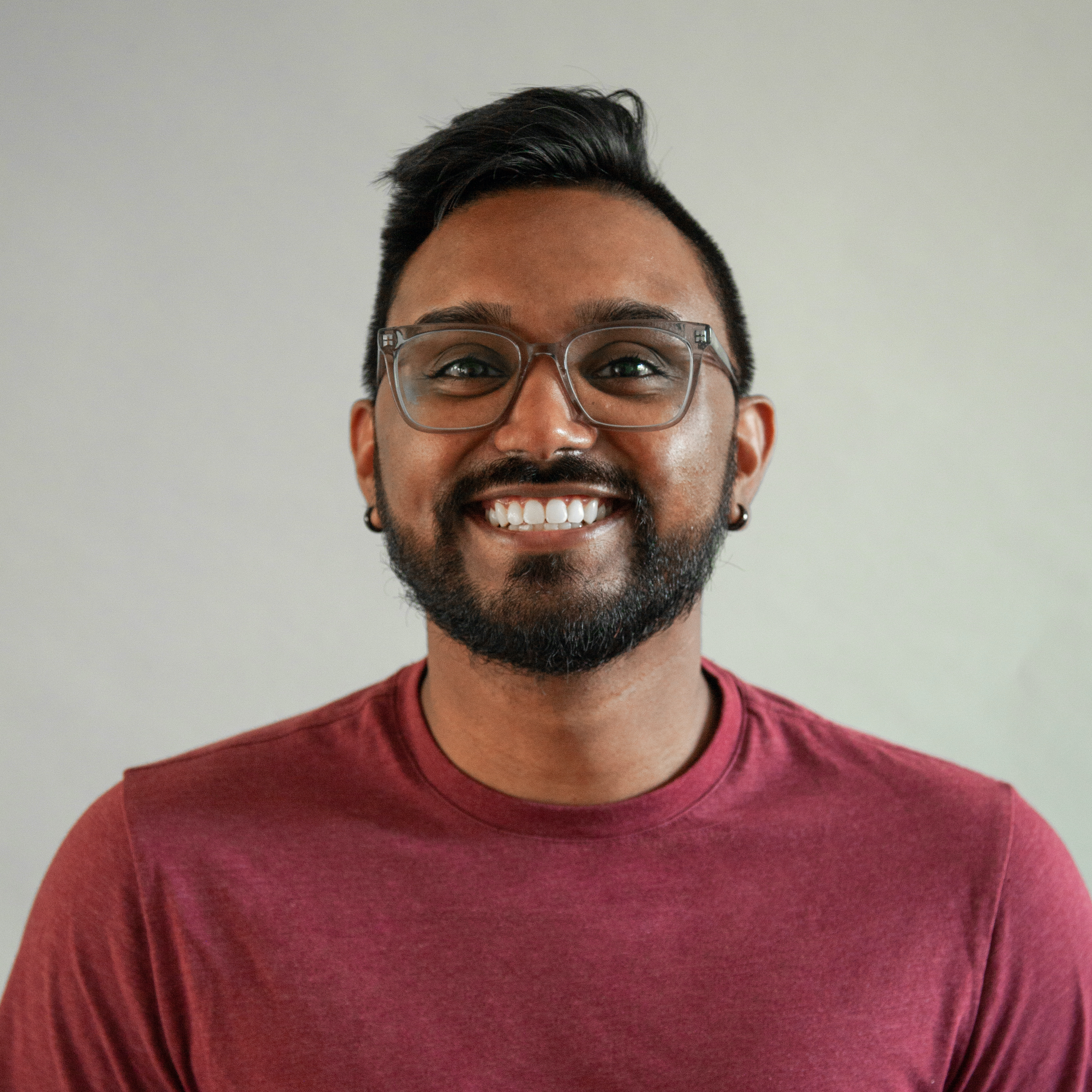
About Me
In 2014, I began my academic career at Adelphi University pursuing a Bachelor's degree in Physics. My goal at the time was to continue onto graduate school to pursue a degree in Electrical Engineering but my junior year I came to a realization that the goal I was working towards was not what I was passionate about. I spoke to my advisor who asked me to reflect on my previous courses to find something that I took interest in. The course that I found most interest in was Math Methods as well as an introductory Matlab course. The most interesting things I took away from those courses how to use programming to solve mathematical and scientific problems as well as how data can be used to draw conclusions that were contradictory to the assumptions that we made. This is where my interest in scientific computing and numerical programming began and the next year I took on an internship at Brookhaven National Lab (BNL) researching quantum computing.
My project at BNL involved studying a simple chain of molecules which is used in condensed matter physics and quantum field theory. The objective was to calculate the ground state energy of the molecule chain using both a classical (binary) computer and a quantum computer and compare the performance of each method by its accuracy and total computation time. A majority of the work involved writing the script that generated the model in such a way that the quantum computer could take in and solve. From this research experience I realized how much I enjoyed programming but not in a scientific and research setting. I looked into graduate programs that involved working in an industry and came across the Data Analytics Engineering program at Northeastern. This relatively new program's directive was to prepare programmers of all backgrounds for work in industry, whether it be as a data analyst, data scientist or data engineer.
I started my graduate degree at Northeastern University in 2018 and I was thrown into a new world of programming. Coming into the program I had only known Java, Matlab, Python and bits and pieces of other languages such as C++, Scheme etc. I learned about how programming can be used on already existing data in terms of visualizations and also how it can be used to predict the future. While I was learning the statistical programming language R, I was also learning how Python can be used in the same way. Originally I used Python to build numerical models and for simulations in the same way Matlab can be used. I was amazed by how many different applications the same language can be used for. By the end of my first year I learned how data can be transformed into a story that can be told through graphs and other type of visualizations and how to properly highlight the important aspects of a dataset.
The second year of graduate school showed me a different aspect of data, which is how it can be stored and accessed. I learned about databases, how they can be designed, relationships between different datatables and one of the languages that can bring them all together: SQL. From my database design course, I created my own database for a mock university, populated different tables with data and was able to generate reports from it using SQL scripts. It was interesting to see how data can go from being unstructured to a structured, organized table in the matter of a few lines of code.
A few weeks before finishing up my Master's degree I created a goal I want to accomplish in my career, which is to be able to oversee data from its creation to ETL and its endpoint which can be in the hands of data analysts and data scientists. I believe that it would be amazing to be responsible for petabytes of data and for it to go through this process so that its easier to use for companies, which in turn can drive business decisions. Data is the future of business and it can be used in an ethical way.